

















Skip to content

Screen Printing at Banana Moon

Our screen printing service is an incredible and longstanding customisation method that enables quick turnaround at a very high quality. It is so fast that thousands of garments can be printed in a day. We use the finest machinery, regularly maintained and operated by an extremely experienced team, to make the best printed t-shirts, hoodies, and kits possible.

Could screen printing be the best clothing customisation for you?

What is Screen Printing?

Screen printing is a type of garment printing that transfers your chosen design to your chosen piece of clothing through a stencil. Though it has roots in Ancient China, the modern version originated in 1907. It has remained popular thanks to the vibrancy of the colours it offers, the durability of the designs, and its suitability for bulk orders. 

What is the Process of Screen Printing?

To create the screen, we print directly onto it using a Direct-to-Screen (DTS) machine. Following this, we use light to expose your design onto the screen, so the mesh allows the ink to pass through. The ink is then pushed through the screen by the machine using a squeegee.

Because of the screen-making process, the clever part is that the ink only goes through the screen, where the design is! We repeat this for every colour in the logo. For example, if you were printing the French flag, you would have 3 screens: one for the blue, one for the red and one for the white.

Explore our versatile range of products to transform with screen printing

What’s the main environmental impact of screen printing?

Typically, screen printing uses large volumes of water for screen creation and cleaning. When creating a new screen, water must be used to remove excess emulsion that affects the design. However, the main issue is the cleaning of the screen. Screens are all fully reusable, so a typical way to clean a screen is to blast it with a pressure washer and chemicals, which takes some time to do.

It also traditionally uses plastisol inks, which are good for colour vibrancy, but, by definition, are a suspension of PVC or other polymers in a liquid plasticiser. Clearly, this means the ink is a man-made plastic product, so not 100% natural, and caution needs to be taken with how the waste from print runs is managed.

Our Eco-Friendly Screen Printing

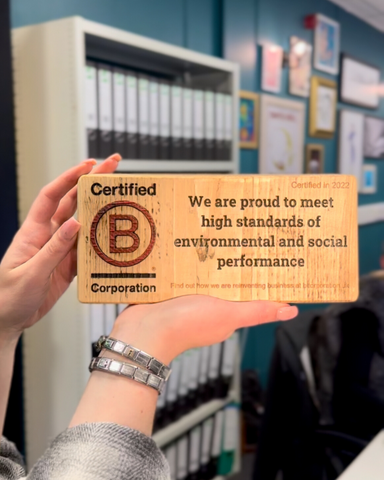
As a B-Corp, sustainability is incredibly important to us at Banana Moon. That’s why we’ve taken a number of measures to make our screen printing process as eco-friendly as possible.

  1. We use an Easykleen tank to collect all excess ink, which is professionally disposed of by waste management. 
  2. We use a new process called direct to screen (pictured to the right) to print a design directly onto a screen, which has removed the need for plastic positives to be used for every new design – a massive saving in the use of plastic
  3. We are transitioning from plastisol to Zodiac™ Aquarius™ water-based inks. These have no PVC in them and are much more natural and softer to touch
  4. We have invested in an automated screen washer to clean all screens, which reuses the same water and chemicals for up to 6 months without needing to be changed over – a huge reduction in water and chemical use to clean screens
  5. We have added a water filtration system to our production wastewater, which captures anything that may enter our waste pipes and prevents it from going to the drain. This is collected and taken away by our safety partner for cleaning.
Learn more about sustainability at Banana Moon. 

Screen Printing with Pantone Colour Match

Another clear benefit of screen printing is that it can be Pantone-matched to specific colours or corporate branding guidelines. Our Pantone colour match software guarantees consistency for your brand. We know how important your corporate colours are, so we have the latest technology to get them spot on! Our special tech tells us the exact measurements of each colour we need to match your Pantone perfectly.

Screen Printing FAQs

What Is Screen Printing Ink?

Usually, ‘screen printing ink’ refers to a thick plastisol ink made from polymers. However, at Banana Moon, we use water-based ink from Zodiac™ Aquarius™. On top of the environmental benefits, printing with water-based inks creates a softer and more breathable print result.

Are Screen Printing Screens Reusable?

Screen printing screens can typically be reused over 100 times. This is part of what makes the printing process so cost-effective, especially for those who plan to place future orders with us, as once we have produced your print, we save all settings to file, and can just re-make a new screen to the exact same spec every single time.

Does Screen Printing Crack?

While screen-print designs using plastisol inks are known to crack over time, our process uses water-based inks. Water-based ink designs are typically much more crack-proof, as the ink soaks directly into the fabric's fibres rather than forming a layer on top of it. 

How Long Does Screen Printing Last?

Your screen-printing personalisation should remain vibrant for 5-10 years, though several factors can affect its longevity. Most significantly, your choice of fabric. Typically, cotton absorbs the ink better and thus retains the vibrancy of the design better than polyester or polycotton blends. Other factors include the amount of UV or chemical exposure your print will receive over time. 

To help your screen-printed t-shirt or hoodie last longer, wash and iron it inside out, use cool water to wash, and avoid chemicals like fabric softener or bleach.

Why not add...
Drawer Title
Similar Products