The environmental cost behind traditional hoodie production
Every stage of a standard hoodie’s lifecycle contributes to its overall footprint. But before personalisation and design, the carbon footprint to produce a standard hoodie is already estimated to be a minimum of 11.21 kg CO2e. This is estimated to be equivalent to:
- 2,601 charges of an average smartphone
- 12 km flown on a long-haul flight
- 187 days of carbon consumption for 1 tree
Plus, when it comes to design, water usage, single-use plastic, and other printing wastage all pose a threat to sustainability.
An average screen-printed design can use up to 4 plastic positives per item, which are thin sheets of acetate used to print the design onto the item. It’s estimated that 40g of single-use plastic is likely to end up in a landfill. Producing an order of school leavers hoodies for a year group of 100 students using traditional screen printing could produce 4kg of single-use plastic, the equivalent of 220 standard PET water bottles or up to 800 single-use plastic carrier bags.
Alongside this, manual screen cleaning by hand using a pressure washer can use 20-40 litres per screen on average. On a hoodie with 4 designs, that can be up to 80 litres of water per bulk order, the equivalent of a standard full bath.
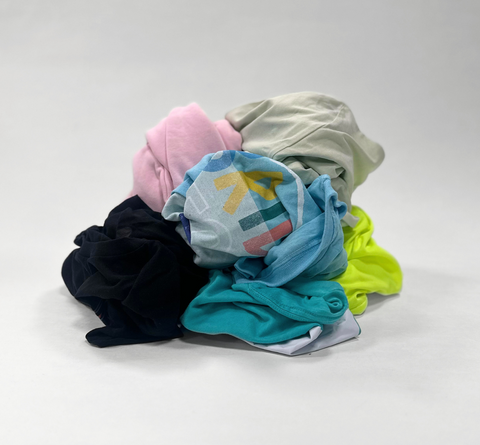
Vinyl weeding, or removing the excess vinyl around the design, can discard up to 60% of the vinyl sheet, depending on design complexity. The backing is single-use plastic, which is another element that can typically only go to landfill unless a better circular use is found for the waste.
The solution: a shift towards sustainable hoodie design
Understanding the environmental impact of leavers hoodies can help encourage more responsible choices, without losing the sense of celebration and identity they represent.
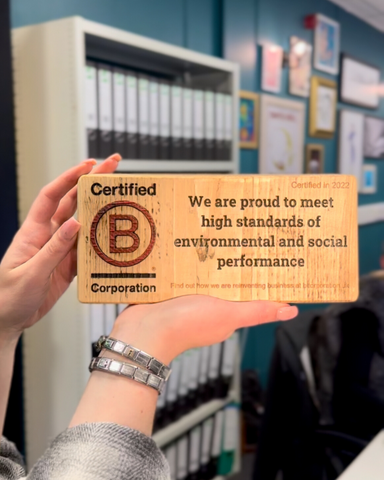
Sustainability is at the heart of everything we do, and we have refined our design process to ensure that, by committing to reduced waste and more eco-friendly choices, our customers are not compromising on design or quality. We utilise the following design methods to pledge this commitment:
Direct to screen (DTS) printing → DTS eliminates the need for plastic positives for every design by printing designs directly onto our mesh screens. This takes out the traditional middle step of using a positive to pass the design onto a mesh screen.
Direct to garment (DTG) printing → DTG is an alternative to screen printing that can reduce water use by up to 95% compared to analogue methods. Since introducing DTG, our water bill has decreased by 25%, as the process removes the need for water-intensive screen preparation and cleaning. DTG is exactly what it says on the tin - designs transferred directly to the garment.
Direct to film (DTF) printing → DTF is an eco-friendly alternative to traditional vinyl transfer prints, and a completely waterless process. Unlike traditional transfer prints, DTF has no application film and requires no weeding. Previously, the carrier film used to transfer the design was wastage, but this is now also recyclable.
Recycled embroidery → Embroidered designs use biodegradable or recyclable backing to minimise waste, as well as including recycled threads made from plastic bottles. Thread cones hold 5,000m of thread, with a standard logo using around 18–24m, meaning one cone can produce 200–250 logos. Empty cones are donated to a local craft charity shop for reuse in projects instead of going to landfill.
Printing Clean Down → An automated screen washer reuses the same water for up to six months, using just 0.4 litres of water and cleaning solution per screen. An ‘Easykleen’ tank collects excess ink for professional disposal, while water-based inks are used instead of plastisol inks for a more eco-friendly process
How to design an eco-friendly school leavers hoodie, without compromising on personalisation:
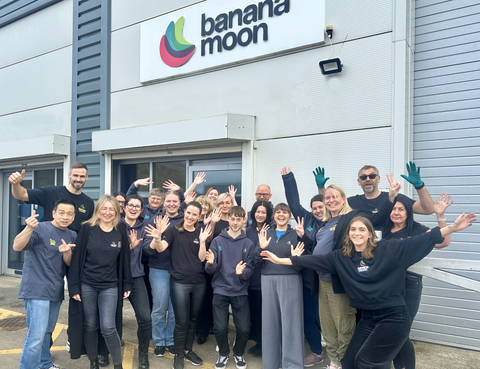
Alex Grace, Managing Director at Banana Moon Clothing, has offered expert advice on how to create an eco-friendly leavers hoodie that champions sustainability, personalisation, and long-lasting meaning:
- Choose hoodies made of recycled materials → Sustainability starts with your product choice, so begin your design with a hoodie that utilises recycled materials. Whether it’s organic cotton, regenerated cotton or recycled polyester, all these materials are created with less impact on the environment and contribute to a more circular economy.
- Prioritise the needs and wants of those wearing the hoodie → To create a much more meaningful memento for students, take the time to understand their needs and expectations for design choices. They want an item that reflects them and their journey, and by creating a product they love, it’s more likely to become a wardrobe staple, rather than another addition to landfill, your leaver's hoodie should be an item you never want to throw away.
- Select the right design choices for you → Once you’ve created the look of your design, consider what design technique is right for you. For example, screen printing is great for larger order designs that are more simple or flat, but are vibrant in colour, and embroidery is perfect for school and college logos. For high-impact designs, production processes can also be combined, whilst still ensuring sustainability needs are met.
- Partner with a sustainable supplier for your leavers' hoodie → Working with a supplier that champions sustainability not only within their production processes, but throughout their business and internal processes, is the easiest method to ensure your leavers’ hoodie is eco-friendly from the get-go.
Ready to bring your design to life? Enter our competition here to be in with a chance of creating your own school leavers hoodie.
Sources
https://www.arbor.eco/carbon-equivalent-calculator